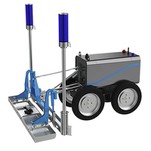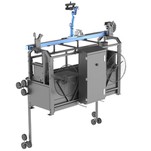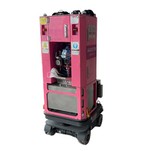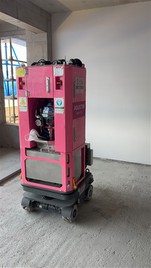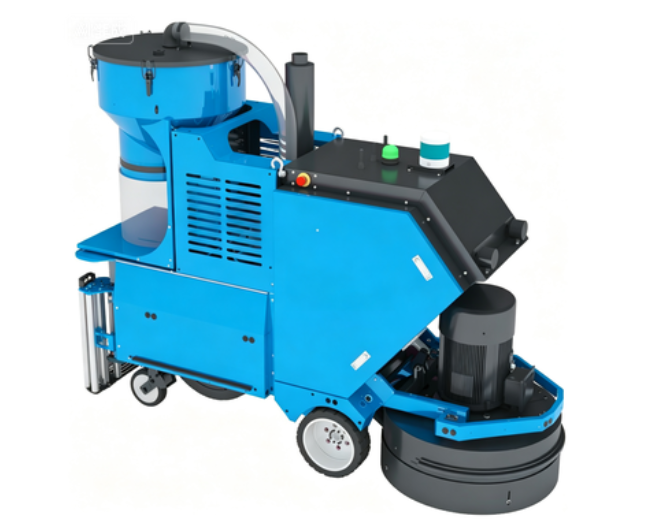

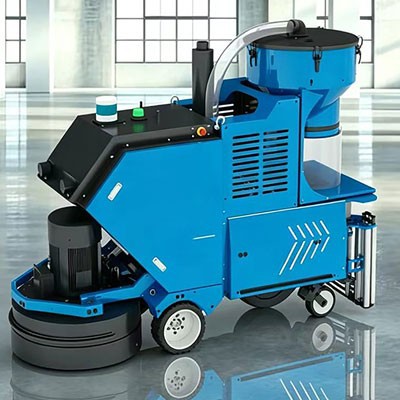
Floor Grinding Robot
| Item | Parameter |
|---|---|
| Operating width | 800 ± 50mm |
| Grinding disc | 4 × 285mm |
| Grinding motor speed | 0~1700rpm |
| Max. moving speed | 0.7m/s |
| Walking endurance | >2h |
| Climbing angle | ≤ 15° |
| Operating voltage | AC380V |
| Rated power | 25kW |
| Battery capacity | 48V & 40Ah |
| Automatic navigation accuracy | ± 50mm |
| Overall dimensions | 2400 × 870 × 1900mm |
| Total weight |
1150kg |
Floor Grinding Robots in the Construction Industry
In recent years, the construction industry has witnessed remarkable advancements driven by automation and robotics. One such innovation that is gaining widespread attention is the floor grinding robot. These intelligent machines are revolutionizing surface preparation processes, enhancing efficiency, safety, and quality in construction projects. Their introduction marks a significant milestone in how builders approach floor finishing tasks.
Floor grinding robots are designed to automate the labor-intensive process of surface preparation, which includes grinding, polishing, and leveling concrete floors. Traditionally, these tasks required considerable manual effort, time, and skilled labor. By integrating robotics, construction companies can achieve remarkably consistent and high-quality finishes with much less human intervention. This not only improves productivity but also helps to standardize results across different projects.
The benefits of floor grinding robots extend beyond efficiency. These machines often come equipped with advanced sensors and AI technologies that enable precise control over grinding parameters. This precision minimizes material waste and prevents damage to the underlying concrete, contributing to more sustainable construction practices. Additionally, the automation of this physically demanding work reduces occupational hazards, promoting a safer work environment for construction personnel.
In large-scale construction projects, time is a critical factor. Floor grinding robots can operate continuously without fatigue, adhering to tight schedules and accelerating project completion. Their ability to work in various environments-including commercial buildings, airports, and industrial facilities-makes them versatile tools in modern construction workflows. Furthermore, the adaptability of these robots to different floor types and conditions ensures that they can meet a wide range of project requirements.
Beyond the immediate advantages on the job site, the adoption of floor grinding robots signals a broader trend toward smart construction practices. As the industry embraces digitalization and robotics, companies are better positioned to improve project management, reduce costs, and enhance client satisfaction. The integration of these robots aligns well with the goals of green building initiatives by lowering energy consumption and minimizing environmental impact related to traditional grinding methods.
Looking ahead, the continuous development of floor grinding robots promises even greater contributions to the construction sector. Innovations such as machine learning, enhanced navigation systems, and remote operation capabilities are expected to further optimize their performance. As more companies adopt these technologies, the construction landscape will become more efficient, safe, and sustainable.
In conclusion, floor grinding robots represent a positive leap forward in construction technology. Their ability to improve precision, safety, and efficiency makes them invaluable tools for modern builders. By embracing these robotic solutions, the construction industry is not only enhancing current practices but also paving the way for a smarter and more sustainable future.
Hot Tags: floor grinding robot, China, suppliers, manufacturers, factory